
Sustainable Lab Cooling for LEAF-Certified Laboratories
How efficient cooling systems help universities improve sustainability performance
01/14/2026
The Laboratory Efficiency Assessment Framework (LEAF), developed by University College London (UCL), is a leading sustainability certification for research and teaching laboratories. More than 120 institutions in 15 countries use LEAF to monitor resource use and reduce environmental impact.
Cooling plays a key role in this effort. Laboratory cooling systems run continuously, consume large amounts of water and energy, and often rely on outdated technologies that limit sustainability progress. Modern, energy-efficient systems such as JULABO’s VALEGRO chillers demonstrate how sustainable lab cooling can significantly reduce resource consumption and support LEAF-certified laboratories in reaching their environmental goals.

Why Is Sustainable Lab Cooling Critical for LEAF Performance?
Cooling is one of the largest hidden contributors to laboratory resource consumption.
High water consumption
Laboratories can account for up to 60 percent of total water use at universities. Single-pass tap water cooling is still widely used, despite being highly inefficient. Reducing this practice directly strengthens LEAF reporting.
Dry ice dependency
Dry ice is still required for many cooling workflows. This adds recurring costs, safety considerations and additional carbon footprint, all of which appear in LEAF documentation.

Significant electrical demand
Conventional laboratory chillers mostly rely on fixed-speed compressors and fans. These systems run at full power even under partial load, increasing energy use and operating costs.
Strong demand for measurable improvements
LEAF certification requires clearly reported reductions in water, electricity and CO₂ emissions. Cooling upgrades provide measurable, traceable data that align perfectly with LEAF requirements.
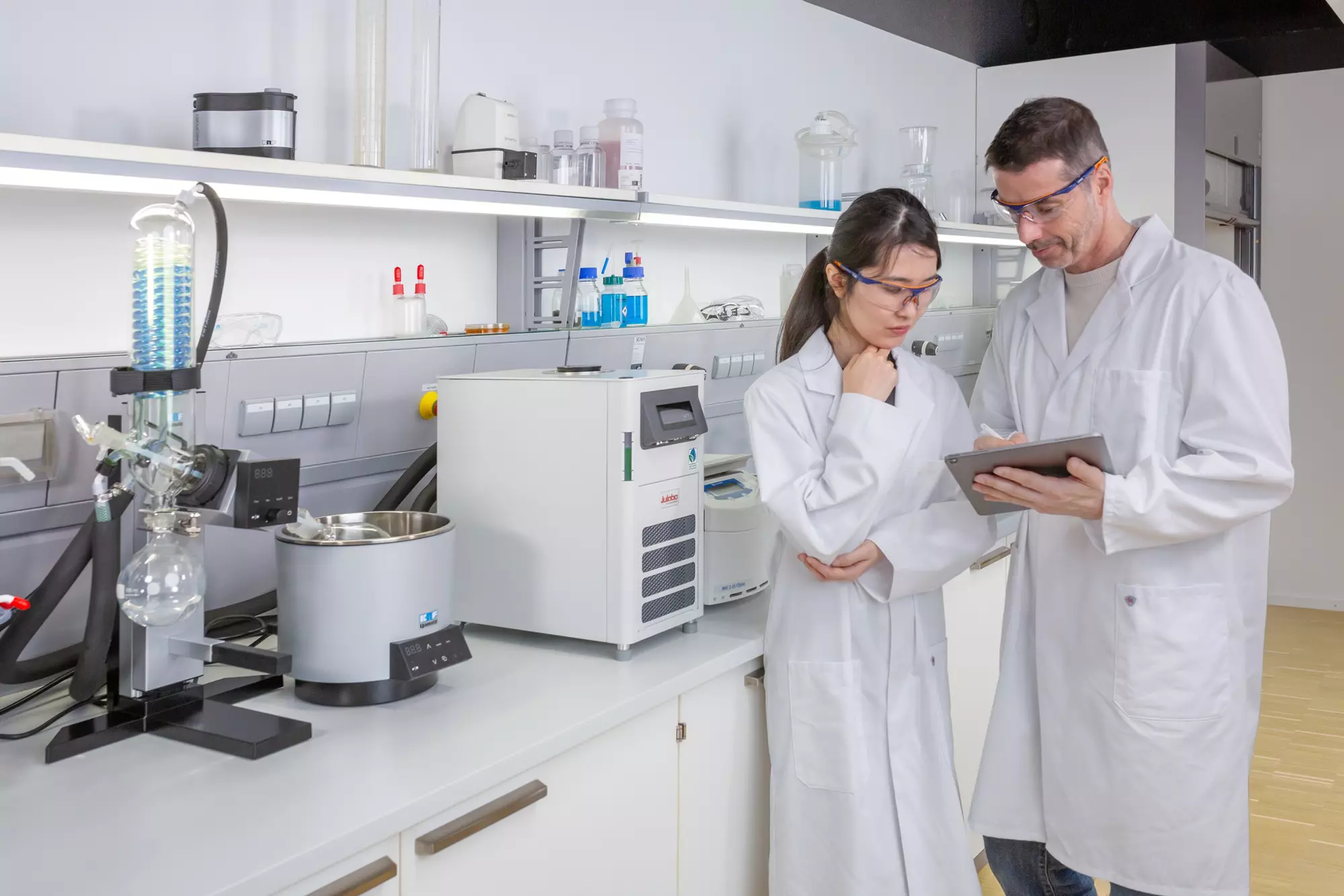
Funding opportunities for sustainability technologies
Many universities offer Sustainability Funds or carbon-reduction budgets that support the adoption of energy-efficient laboratory equipment. These funding mechanisms are designed to accelerate investments that deliver measurable reductions in energy use, water consumption and CO₂ emissions. Cooling systems are highly eligible because of their documented impact on resource savings. In many cases, chiller upgrades represent one of the fastest ways to achieve visible sustainability improvements while also reducing long-term operating costs.
Energy-efficient laboratory chillers: Introducing VALEGRO
A modern cooling solution designed for sustainable laboratory environments.
Once the importance of cooling is understood, choosing an efficient cooling system becomes a strategic decision. The new VALEGRO chillers from JULABO are engineered to meet the needs of sustainability-focused laboratories and LEAF-certified institutions.
VALEGRO Recirculationg CoolersHow do VALEGRO coolers improve lab cooling efficiency and LEAF metrics?
VALEGRO coolers completely replace tap water cooling, significantly reducing water consumption and helping labs document measurable resource savings. At the same time, they eliminate risks linked to fluctuating water availability.
From 800 W upwards, VALEGRO operates with speed-controlled compressors and fans that adapt precisely to the current demand. This avoids unnecessary full-load operation and delivers electricity savings of up to 75 percent compared to conventional lab chillers.
In many laboratory workflows, dry ice is still used for temporary cooling, transport or process stabilization. With VALEGRO, this reliance can be significantly reduced or even eliminated in many applications. This supports LEAF goals related to resource efficiency, safety and cost reduction, while also simplifying daily lab routines.
VALEGRO chillers use natural refrigerants with a very low global warming potential instead of synthetic alternatives. This helps significantly reduce the climate impact of laboratory cooling and supports long-term sustainability goals beyond formal LEAF criteria.
In many laboratories, constant background noise is part of everyday work. Cooling systems often run continuously and can affect concentration, communication and overall comfort. With VALEGRO, JULABO uses variable-speed compressors and fans that adapt to the actual cooling demand. This significantly reduces noise emissions in daily operation and improves working conditions in research and teaching labs.
Strong financial performance
Reduced energy and water usage, plus fewer consumables, allow VALEGRO to approach a full return on investment over just a few years. These savings are straightforward to document within LEAF frameworks. This makes VALEGRO chillers particularly suitable for laboratories that need clear, quantifiable data to support their sustainability reporting and certification progress.
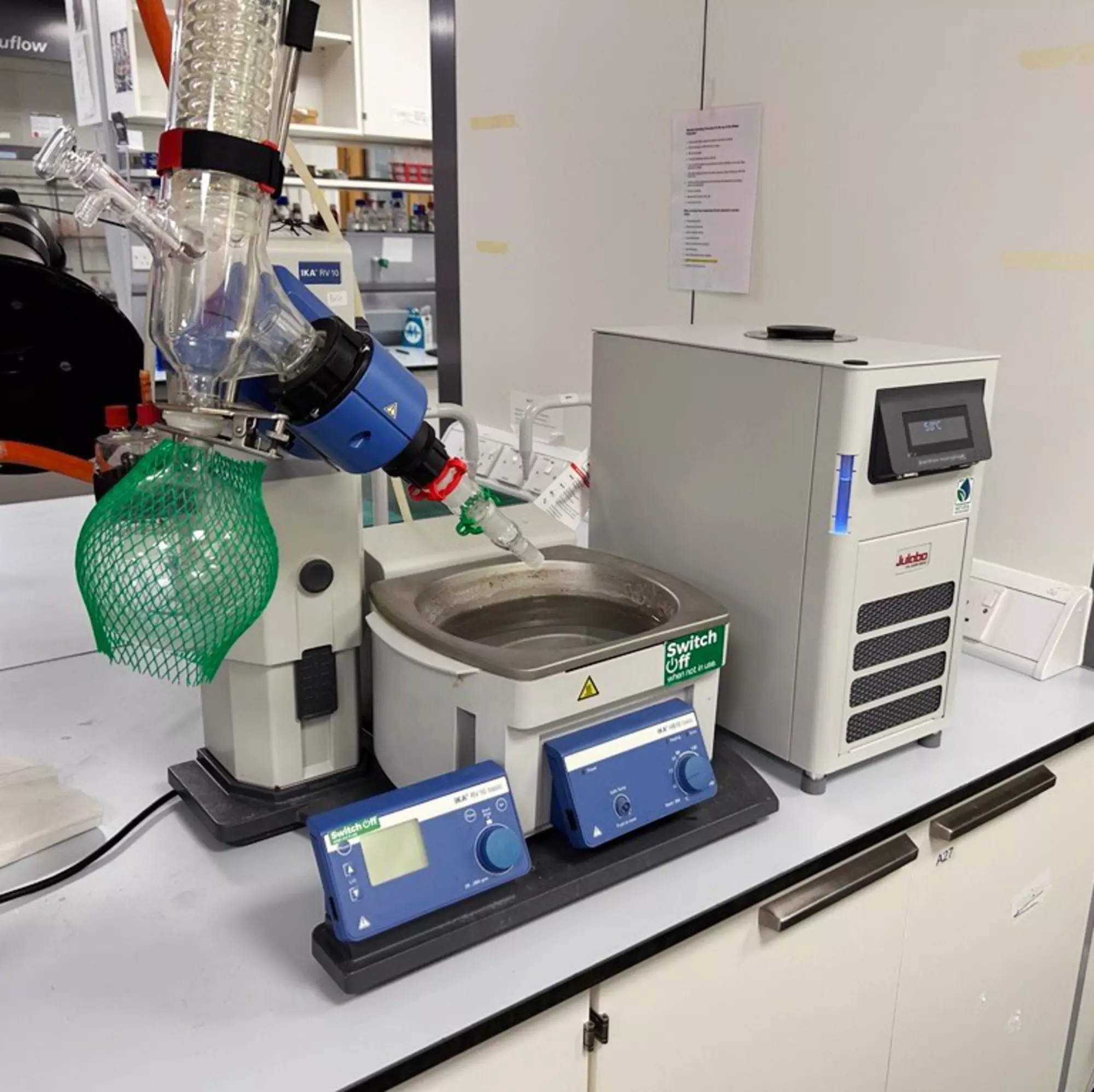
LEAF case study: University of Surrey & VALEGRO cooling
A practical example of sustainable lab cooling in higher education.
The chemistry teaching laboratories at the University of Surrey recently installed three VALEGRO chillers as part of their transition from LEAF Bronze to LEAF Silver by 2026. The upgrade was fully funded through the university’s Sustainability Fund. By replacing tap water cooling and reducing dry ice usage, the lab achieved measurable improvements in water efficiency and energy use.
Staff also report that the quieter operation and stable cooling performance support a better teaching environment and reduce operational disruptions. This case illustrates how sustainable lab cooling can directly improve LEAF performance while lowering long-term operating costs.
LEAF as a catalyst for ESG integration
LEAF helps laboratories turn ESG goals into practical action. By reducing energy and water consumption, lowering CO₂ emissions and promoting the use of natural refrigerants, LEAF strengthens the environmental pillar of ESG. Clear documentation of these improvements also supports transparent reporting and responsible decision-making.
Next steps toward sustainable cooling in research and teaching labs
Cooling is one of the most effective levers for improving sustainability in laboratories. Switching to energy-efficient chillers like VALEGRO enables measurable savings in water and electricity, lowers operating costs, reduces reliance on dry ice and supports improved LEAF metrics. VALEGRO provides a modern, efficient and future-ready solution for sustainable cooling in university laboratories.