
How Numerical Simulation Makes Temperature Control More Efficient and Reliable
From fluid flow to component strength: discover how numerical simulations help JULABO engineers develop reliable and energy-efficient temperature control systems
10/15/2026
Modern temperature control systems are expected to do more than simply heat or cool. They need to reach setpoints quickly, hold temperatures precisely, operate reliably and use energy efficiently. Much of what makes this possible is determined long before a finished temperature control unit reaches the laboratory or production environment. At JULABO, numerical simulations show engineers how components and entire systems will behave – so that not every design variant has to be built and tested physically.
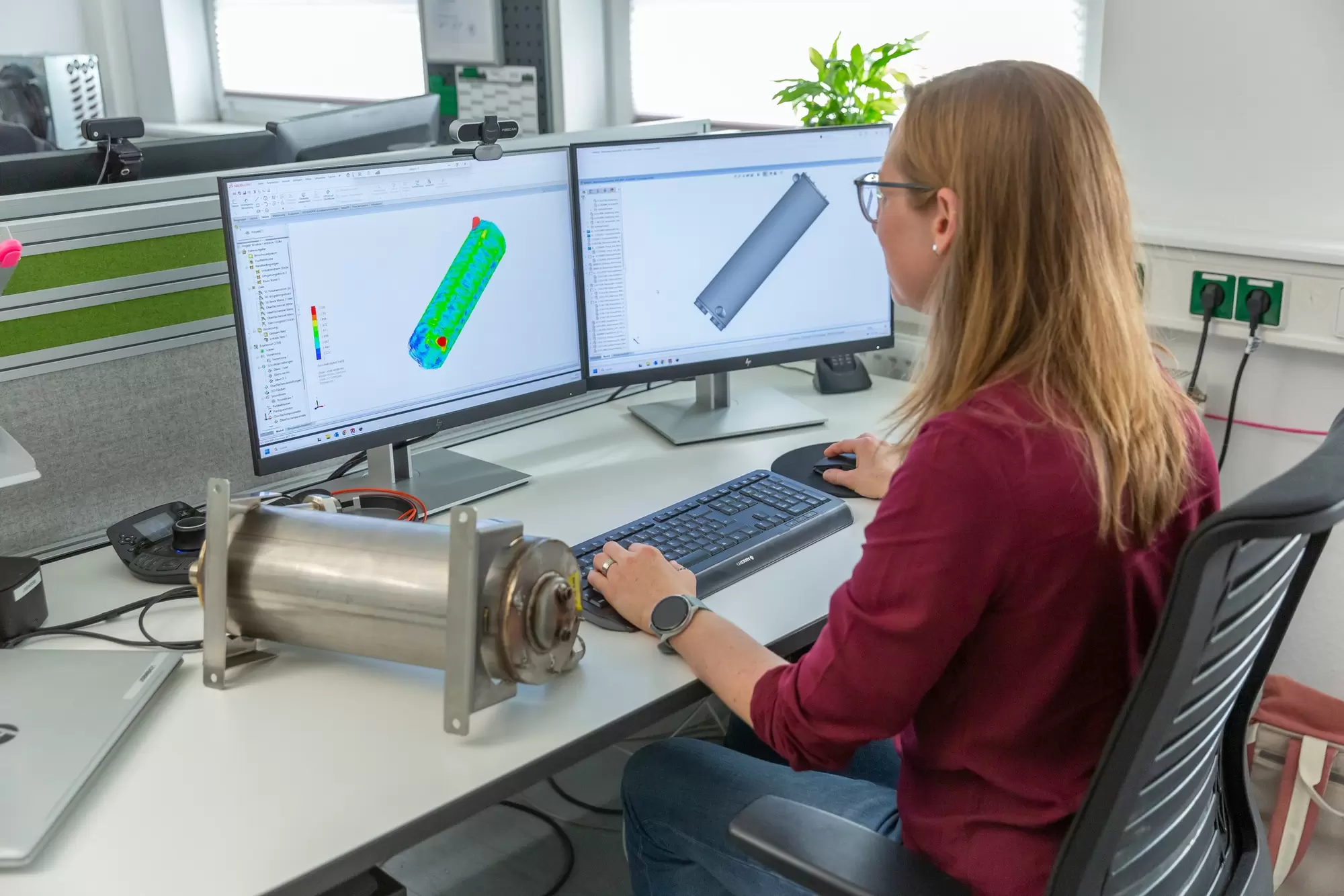
For end users such as laboratory professionals and engineers, much of this engineering remains invisible. Yet it is essential for the performance, efficiency and reliability they rely on every day. To find out what happens behind the scenes, we visited Sabrina Müller, simulation expert and development engineer at JULABO, and took a closer look at how virtual models help optimize real components.

Energy efficiency starts with understanding the system
Energy efficiency is not the result of a single design decision. Pump sizing, flow resistance, heat transfer, heating and cooling performance and component design all interact. Using simulations, engineers can investigate these interactions early in development: design alternatives can be compared virtually, undesirable behavior identified and physical testing focused on the most promising solutions.
Reducing unnecessary pressure losses, for example, can lower the demands placed on the pump. Efficient heat transfer allows for better use of the available heating and cooling capacity. “When it comes to energy efficiency, it’s always about looking at the system as a whole,” explains Müller. “Simulation shows us how the individual components influence one another and where a design can be improved.”
Making invisible flow visible with CFD
One method used at JULABO is Computational Fluid Dynamics, or CFD. It allows engineers to analyze how liquids or gases move through complex geometries and how fluid velocity, temperature and pressure are distributed inside a component. A heat exchanger developed for the PRESTO series shows how CFD is used in JULABO product development. Temperature control fluid flows through the component and past the electric heating elements. For effective heat transfer, the fluid should reach all relevant areas as evenly as possible.
When simulating an early design, however, the engineers saw that the fluid tended to follow certain paths while other areas received less flow. Such low-flow areas, or dead zones, can reduce heat transfer and cause local hot spots at the heating surfaces. “When you look at a component from the outside, you might assume that the fluid inside is evenly distributed,” says Müller. “The simulation shows us where that’s actually the case – and where it isn’t.”
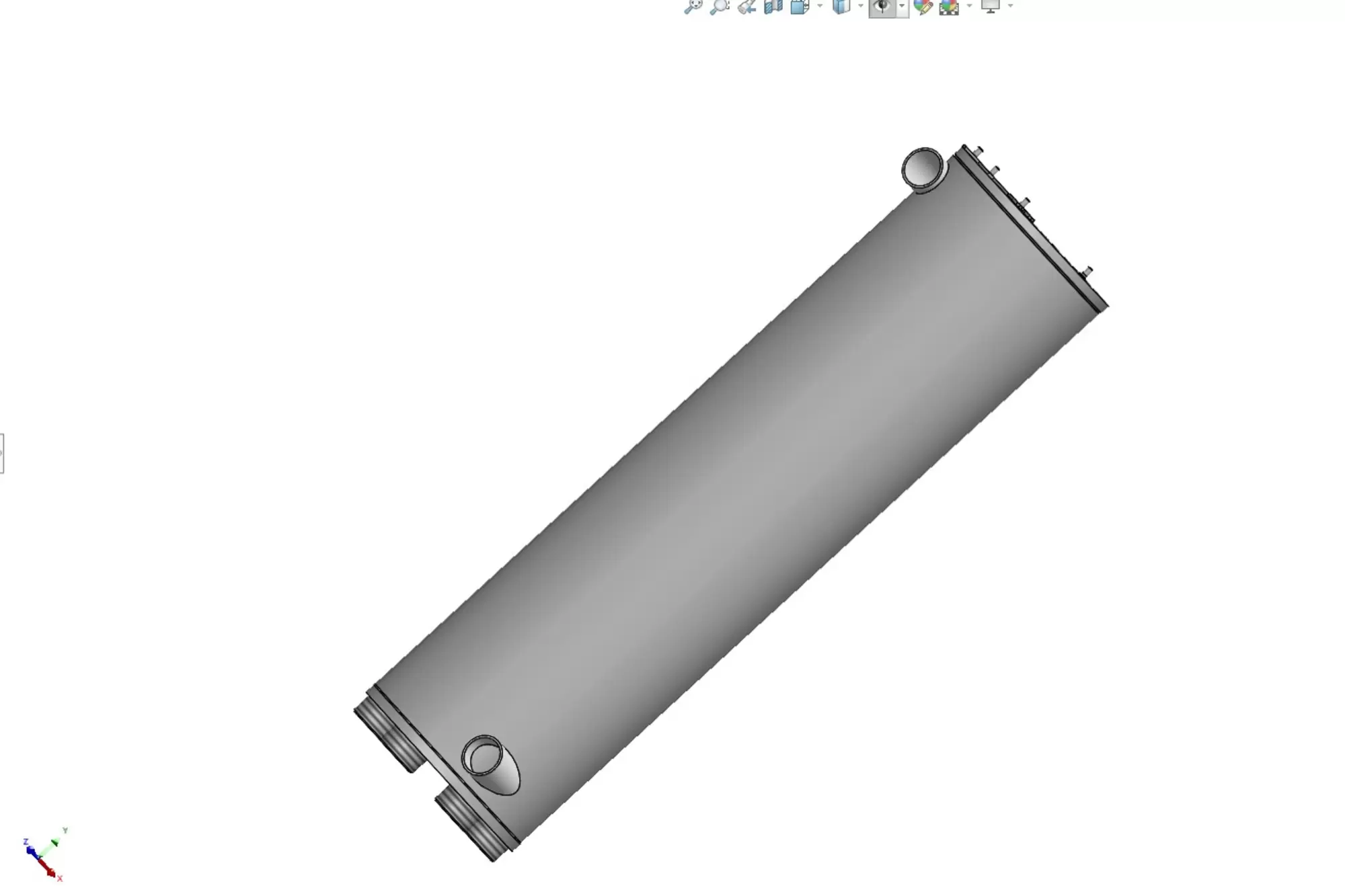
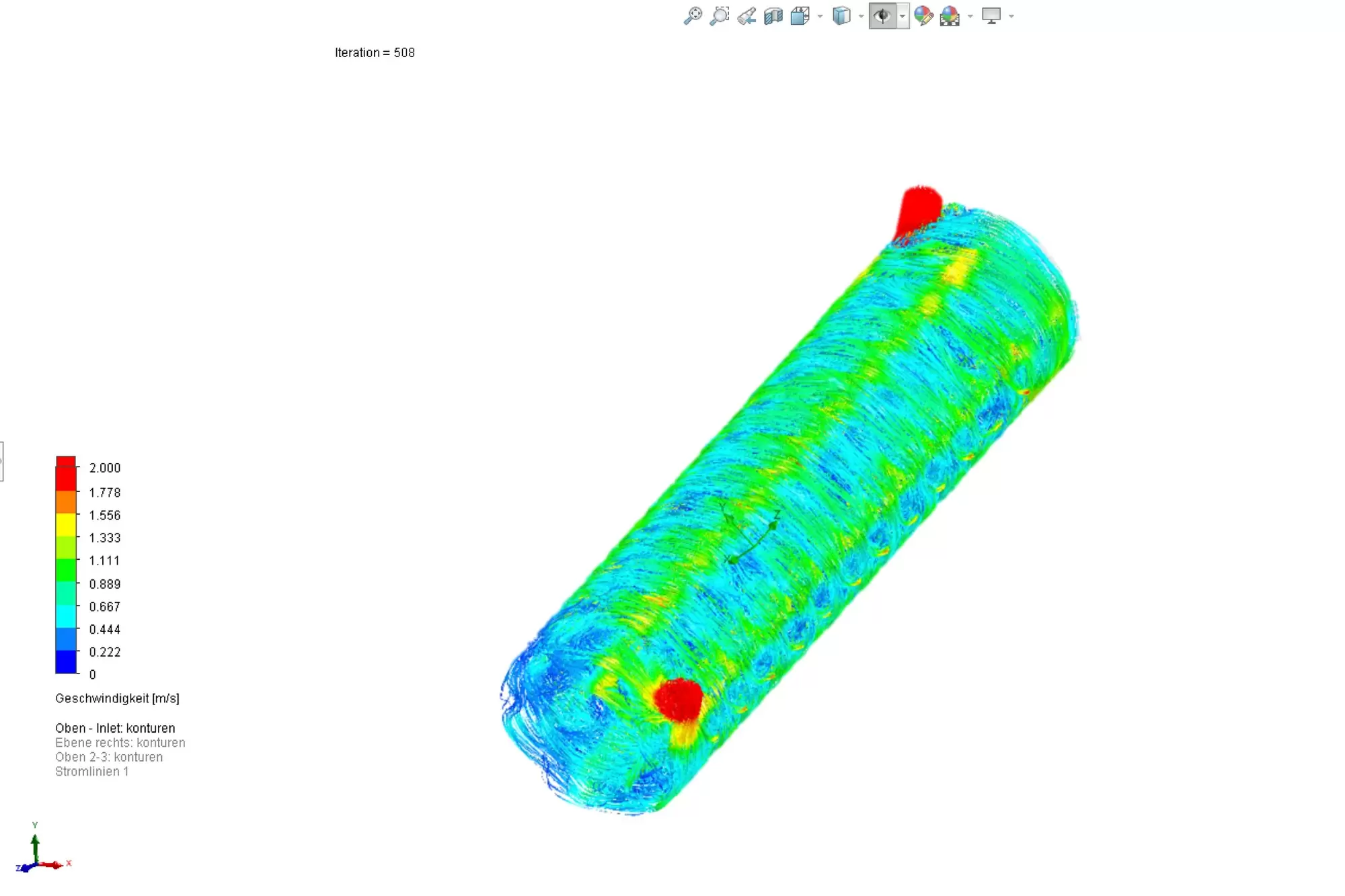
Based on these findings, the engineers worked with the design team to revise the internal flow path and ran new simulations of the updated geometry. These confirmed a much more even flow distribution. The exact design details remain part of JULABO’s internal development expertise. What matters to the user is the result: better utilization of the available heating capacity, fewer local hot spots and therefore reduced thermal stress on the individual components.
Beyond flow: analyzing components with FEM
CFD is only one aspect of numerical simulation at JULABO. The Finite Element Method, or FEM, is used to investigate how components behave under mechanical or thermal loads. It can show where stresses occur, how much a component deforms and whether a structure is sufficiently stable. Engineers can therefore compare different concepts and determine where material is actually needed.
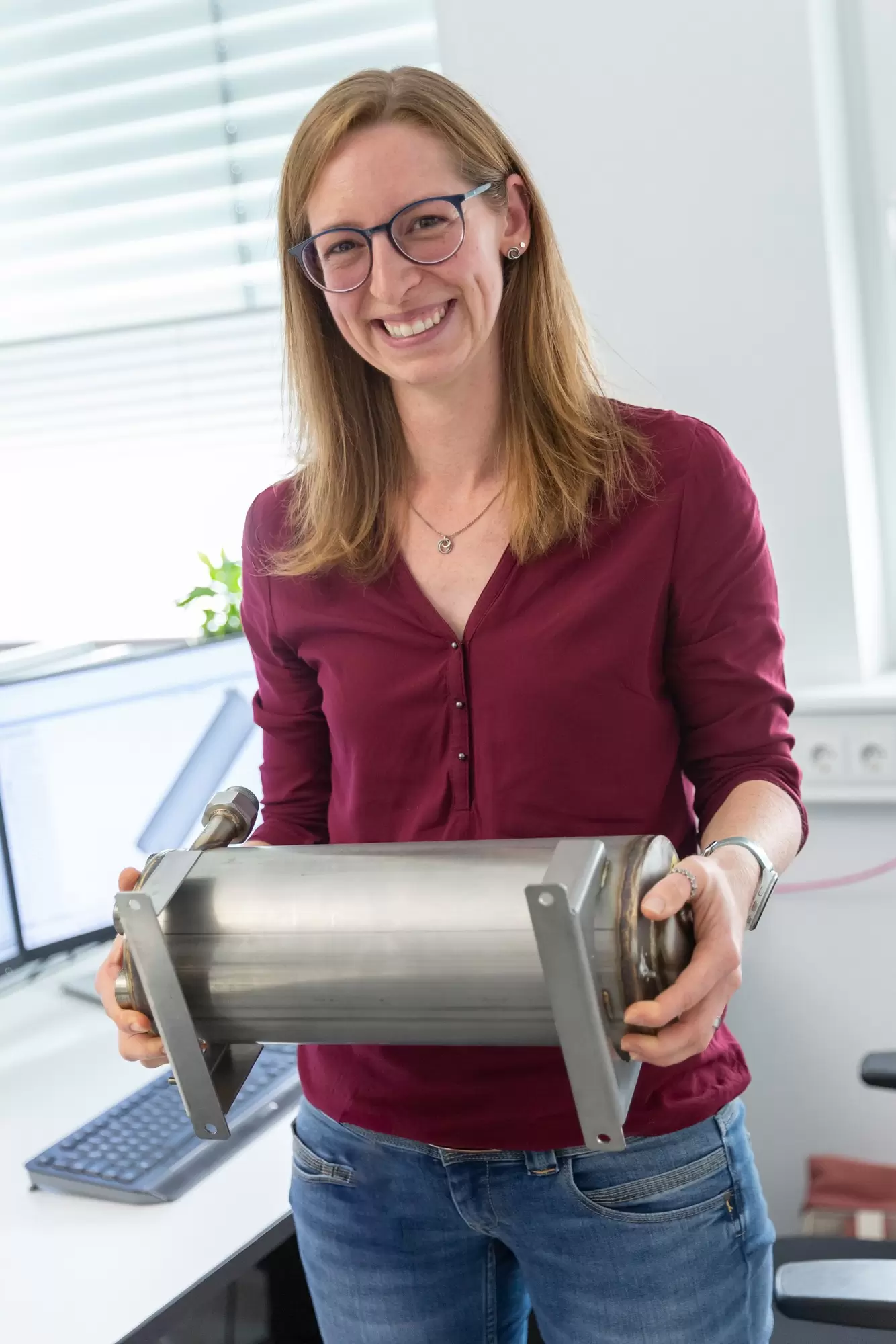
“With CFD, we can analyze fluid flow and heat transfer, while FEM provides answers to questions about stresses and deformations,” explains Müller. “Both methods help us understand a component before we build the final version.”
From simulation to real-world testing
Simulation does not replace physical testing. Instead, it helps engineers identify promising solutions before prototypes are built. A typical process starts with a CAD model. Once the relevant operating conditions have been defined, the component is simulated and the results are discussed with the design team. If necessary, the geometry is adjusted and analyzed again. Once a promising solution has been found, a physical prototype is built and tested.
“The big question is always how well the simulation matches reality,” says Müller. “Simulation helps us find the right direction, and real-world testing confirms whether everything works as expected.” The results of physical tests can, in turn, help refine future simulation models. Virtual development and real-world testing are therefore two parts of the same process.
Engineering that remains invisible
For users, a modern temperature control unit can appear deceptively simple: connect the application, set a temperature and let the system do its job. Behind that simplicity lies extensive development work. Flow paths, heat transfer, component strength, pump performance, heating, cooling and control technology all have to work together.
Numerical simulation is one of the tools JULABO uses to understand and optimize these interactions early in development – alongside design engineering, prototyping, testing and validation. Performance, reliability and energy efficiency are not added at the end of product development. They have to be engineered into the system from the very beginning.